Shifter / clutch problems
Yikes!! Well stuff happens. I would go with a stock setup if you like trouble free. i have a stage one set up. It works great . I also have it in my old bug and it brakes cables and the hook that holds cables. that is why i want with hydraulic clutch in the buggy. you can go with a stock pressure plate and a new 3 puk that was made to bite like a stage one set up. I saw it in an add. claimed to hook up like a stage one with less work on your leg. sounds good to me.
It looks like your pressure plate failure may have a been caused by a mismatched pressure plate and throwout bearing. You are using an early style throwout bearing and fork along with a late model pressure plate. The pressure plate for your throwout bearing will have a ring on the pressure plate ears for the throwout bearing to contact when the throwout bearing is engaged. The late model pressure plate has no ring on the ears because the throwout bearing is guided to the pressure plate ears on a guide tube. The pictures I posted are of a diaphram style pressure plate, your pressure plate was a 3 finger design but I think you will get the idea. By the way 3 finger and diaphram pressure plates do interchange as long as you use the correct style (ring or no ring). Pressure Plate for 1971 and newer.  Pressure Plate for 1970 and older.
Pressure Plate for 1970 and older. I think '68 production transaxles starting using the guide tube/sleeve. I have 2 '68's that were made within 10,000 units of each other. One has it, the other doesn't, but I'm thinking one has had it's transaxle swapped with a '67 unit since it still has the backup light switch. Here's a website that shows a later style trans with the sleeve in place. http://www.vw-resource.com/images/040_tranny_ready.jpg The release bearing slides back and forth along the sleeve. That style takes a different type of pressure plate and release bearing. Since I didn't see the sleeve on Brice's car, I'll have to assume he has a pre '68 transaxle.
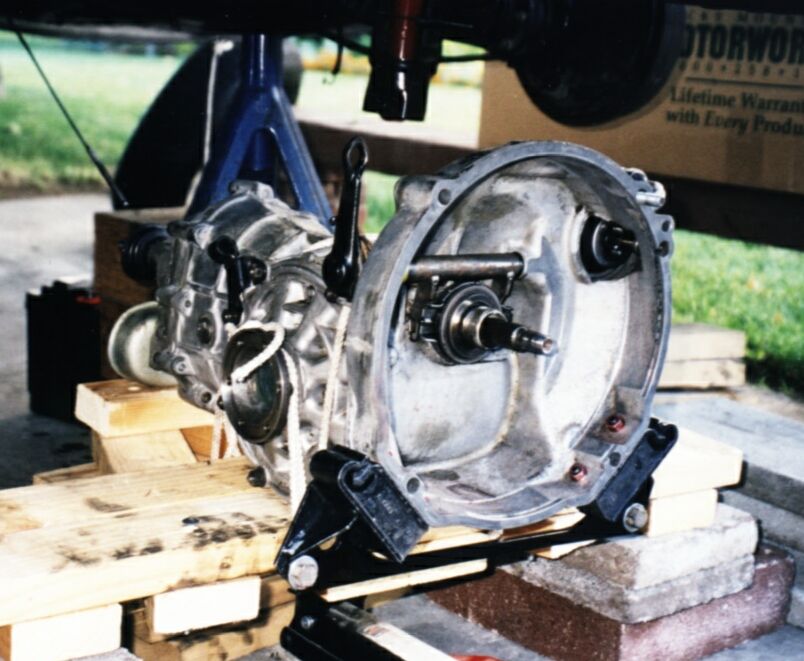
back up the truck
Did you recently replace the clutch? If so its is possible the the incorrect pressure plate was used, The newer style has a ring around where the throw out bearing engages the plate, If you used the older style in a newer trans-axle it will now allow suffecient clearance for reverse.
[QUOTE="newmanx59"]It looks like your pressure plate failure may have a been caused by a mismatched pressure plate and throwout bearing. You are using an early style throwout bearing and fork along with a late model pressure plate. The pressure plate for your throwout bearing will have a ring on the pressure plate ears for the throwout bearing to contact when the throwout bearing is engaged. The late model pressure plate has no ring on the ears because the throwout bearing is guided to the pressure plate ears on a guide tube. The pictures I posted are of a diaphram style pressure plate, your pressure plate was a 3 finger design but I think you will get the idea. By the way 3 finger and diaphram pressure plates do interchange as long as you use the correct style (ring or no ring). Pressure Plate for 1971 and newer. Pressure Plate for 1970 and older. [/QUOTE] That was already covered... 
Pressure Plate for 1970 and older. [/QUOTE] That was already covered... Just wanted to let you know my experience. 3 plus years with a stock diafram style pressure plate and stock disk. Mild 1914. About 12 days a year at Glamis running Desert Traks (they have small maybe 3/4" paddles), climb pretty much anything, have to slip the clutch a lot, never a problem. I think a stock clutch is a good choice.